Rumäniens andlige fader talar om bönen, precis innan han dog.
onsdag, juni 27, 2007

måndag, juni 25, 2007
onsdag, juni 06, 2007
vertigo

den här bilden har nån gjort genom att ta en ruta varje minut från hitchcocks film vertigo (via alan jacobs).
tisdag, juni 05, 2007
THE ICON OF THE THEOTOKOS OF VALAAM RETURNED TO HOME MONASTERY FROM SPACE + Православие.Ru

THE ICON OF THE THEOTOKOS OF VALAAM RETURNED TO HOME MONASTERY FROM SPACE + Православие.Ru: "The copy of the miracle working icon of Theotokos of Valaam returned to its home monastery at the Ladozhskoye lake. According to the press secretary of the Valaam monastery Mikhail Shishkov, the revered icon was met at the main cathedral on the island, where it would be kept from now on.
Oil-painted copy of the miracle working Valaam icon was delivered to the space station with the blessing of the great Northern monastery in September 2005. It was carried by a freight spaceship Progress M54, and, according to the astronauts, has purified the space station. Accompanying Sergey Krikalev and John Phillips it flew around the Earth more than a thousand times.
The original version of the Theotokos of Valaam was created at the end of the nineteenth century by the monk of the Valaam monastery Alipy (Konstantinov). The Mother of God is pictured full height, walking on clouds with Her Son in Her arms. The space station’s copy was painted by the brothers of the Valaam monastery. Visitors from the orbital space center arrived at the monastery last summer, and Bishop Pankraty (Zherdev) of Troitsk offered them the shrine to forward to the space station."
fredag, juni 01, 2007
Czeslaw Milosz - Poetry: Encounter
Czeslaw Milosz - Poetry: Encounter:
We were riding through frozen fields in a wagon at dawn.
A red wing rose in the darkness.
And suddenly a hare ran across the road.
One of us pointed to it with his hand.
That was long ago. Today neither of them is alive,
Not the hare, nor the man who made the gesture.
O my love, where are they, where are they going
The flash of a hand, streak of movement, rustle of pebbles.
I ask not out of sorrow, but in wonder.
Wilno, 1936"
We were riding through frozen fields in a wagon at dawn.
A red wing rose in the darkness.
And suddenly a hare ran across the road.
One of us pointed to it with his hand.
That was long ago. Today neither of them is alive,
Not the hare, nor the man who made the gesture.
O my love, where are they, where are they going
The flash of a hand, streak of movement, rustle of pebbles.
I ask not out of sorrow, but in wonder.
Wilno, 1936"
torsdag, maj 31, 2007
Benjamin som cowboy
en video från igår som dokumenterar mig som cowboy här ute på landet. fick jaga sex kossor från vår gräsmatta.
tisdag, maj 29, 2007
“A Traveler”
Denise Levertov
If it’s chariots or sandals,
I’ll take sandals.
I like the high prow of the chariot,
the daredevil speed, the wind
a quick tune you can’t
quite catch
but I want to go
a long way
and I want to follow
paths where wheels deadlock.
And I don’t want always
to be among gear and horses
blood, foam, dust. I’d like
to wean myself from their strange allure.
I’ll chance
the pilgrim sandals.
Denise Levertov
If it’s chariots or sandals,
I’ll take sandals.
I like the high prow of the chariot,
the daredevil speed, the wind
a quick tune you can’t
quite catch
but I want to go
a long way
and I want to follow
paths where wheels deadlock.
And I don’t want always
to be among gear and horses
blood, foam, dust. I’d like
to wean myself from their strange allure.
I’ll chance
the pilgrim sandals.
torsdag, maj 10, 2007
måndag, april 30, 2007
Loney, Dear \ 1 @ Schubas 031807
Loney, dear i chicago. kameran missar mig precis. mina kompisar syns dock.
torsdag, april 12, 2007
mer Berry
här kommer mer om och av wendell berry. hade som uppgift att skriva en reflektion om en av hans dikter, här kommer den, tyvärr på engelska.
dikten:
I know for a while again
the health of self-forgetfulness
looking out at the sky through
a notch in the valley side,
the black woods wintry on
the hills, small clouds at sunset
passing across. And I know
that this is one of the thresholds
between Earth and Heaven.
It is a place in the world,
a place also in the mind,
the mind's most native place,
ancient beyond time's age,
from which even I may step
forth from my self, and be free.
mina tankar:
Hans Urs von Balthasar calls time “the grand school of love”. He goes on to say: “if time is the ground of our existence, then the ground of our existence is love. Time is existence flowing on: love is life that pours itself out”. In the poetry of Wendell Berry we encounter a similar notion of time and love, which to a large extent receives form in his poetics of place. It is precisely in being present at a specific place, in letting time pass, that we can learn to love: "To defend what we love we need a particularizing language, for we love what we particularly know" (Miracle of Life). In his “particularizing language” Berry displays a deeply Christian instinct in that the concrete can, with time, with love, become a living presence of that which is beyond our grasp, the mystery of incarnation. Concern with particularity does not here become mere realism but rather an iconic mediation of the transcendent.
In his fifth Sabbath, 2000 poem Berry gives expression to this sensitivity for place in a meditative observation of nature. In the very first line of the poem the temporal mode of placed meditation becomes clear: “I know for a while again / the health of self-forgetfulness”. The first line includes two temporal qualifications of the nature of this experience. He signals that what he knows is “for a while”, he is aware that all knowing passes. It is not pessimism, but it is also definitely not optimism about the conclusiveness of human experience. He has experienced something like this before: he is knowing “again”. What does he know then? All we know so far is that the nature of the experience is temporally conditioned. But what will become clear is that what Berry is getting at is not just a foregrounding of the emphemerality of all human knowing: it is rather the experience of human existence in time itself that conveys a fundamental truth about the place we inhabit as humans. What Berry knows “again” is “the health of self-forgetfulness.” Living in time requires a constant openhandedness about what we hold to be ours and what we are. All things pass, and the imposition of what the self desires cannot but be repeatedly worn down by the passage of time.
The first object of Berry's perception is the sky. It is important to note that he is not only observing the sky, he localizes himself in a framework and he is therefore signaling a limitation to his view of the vast sky. He is “looking out… through a notch in the valley side”. The observer in this poem is not roaming free on some Romantic heath experiencing formless and sublime longing. No, he is located in a narrow mountain pass, which allows for a certain particular view of the sky. In this place of direct but limited view the “black woods” surround him. For someone familiar with Berry's poetry the presence of trees cannot pass one by as mere props. The arboreal world is rather a frequently recurring image, which contains much of Berry's poetics of place. Trees stand planted in the dark unknown world of the soil, from which they incorporate (Berry probably wouldn't mind applying this anthropomorphic corpus to trees) nutrition that makes their seasonal, temporal beauty and fruitfulness possible. The vision of the sky is not that of a vast empty sky. No, yet again we see change and movement essentially tied to the perception. He sees “small clouds at sunset / passing across.” The clouds are moving across the sky, and as a placed observer, rooted with his brothers the trees, he cannot but accept the vision as it presents itself to him. This walk in the woods is occurring at sunset. The archaic expression “sunset”, one of the last remains of a geocentric cosmology in our language, implies the solid situatedness of the observer: time has passed, the day is over, and the light of day is leaving us. Even in the situation of our new cosmology this image of a sunset expresses the truth of perception in place, with an added awareness of the essential perspectivalism of all observations. The aesthetic fact of a beautiful sunset is only made possible by being situated in a certain particular place. In the rushed pace of jet planes one could conceivably be sufficiently rootless to never experience a single sunset. The line break after “sunset” leaves “passing across” in isolation in the beginning of the next line. Berry isolates this phrase and opens it up to a layered interpretation. The designation of the motion of the clouds as a “passing across” brings to mind other movements of “passing across”, that involve moving “into” rather than only an elevated motion “over” something. This is indeed what Berry turns to in the next line. First we hear a repetition of the poem's first words “I know”. This restating brings to our attention that the central concern of the poem is being exposed. In this place he knows “that this is one of the thresholds / between Earth and Heaven.” The place that the observer inhabits, one that is defined by a particularized rooted view within the movement of time and change is a mediating point between the concrete reality of his life-world and a transcendent reality. It is important to note that he calls it “on of the thresholds”. He does not claim that this is the one and only place, but it is his.
Berry's notion of particularity as a place of revelation and truth is a decidedly anti-Enlightenment move. The dichotomies between “body and soul, self and nature, culture and earth” are subverted by his holistic instincts. But Berry also gives place for the human experience of interiority in the coming lines. The place that he occupies in this poem “is a place in the world, / a place also in the mind, / the mind's most native place…” The threefold repetition of place in these three lines is an insistent placement of the experience of the mind in particularity. It is not so much that the experience of the mind need to be denied as always in essence involving a denial of particularity: place rather allows mind to be fully realized as a fully human faculty, with its distinctive strengths and inherent dangers. In the last lines of the poem Berry returns explicitly to the knowledge he claimed awareness of in the first two lines: “self-forgetfulness.” It is in the particularity of this liminal space “between Earth and Heaven” that a sufficiently solid place is given him to be able to “step / forth from my self, and be free.” The experience of time in a particular place has indeed been for Berry a “grand school of love.”
dikten:
I know for a while again
the health of self-forgetfulness
looking out at the sky through
a notch in the valley side,
the black woods wintry on
the hills, small clouds at sunset
passing across. And I know
that this is one of the thresholds
between Earth and Heaven.
It is a place in the world,
a place also in the mind,
the mind's most native place,
ancient beyond time's age,
from which even I may step
forth from my self, and be free.
mina tankar:
Hans Urs von Balthasar calls time “the grand school of love”. He goes on to say: “if time is the ground of our existence, then the ground of our existence is love. Time is existence flowing on: love is life that pours itself out”. In the poetry of Wendell Berry we encounter a similar notion of time and love, which to a large extent receives form in his poetics of place. It is precisely in being present at a specific place, in letting time pass, that we can learn to love: "To defend what we love we need a particularizing language, for we love what we particularly know" (Miracle of Life). In his “particularizing language” Berry displays a deeply Christian instinct in that the concrete can, with time, with love, become a living presence of that which is beyond our grasp, the mystery of incarnation. Concern with particularity does not here become mere realism but rather an iconic mediation of the transcendent.
In his fifth Sabbath, 2000 poem Berry gives expression to this sensitivity for place in a meditative observation of nature. In the very first line of the poem the temporal mode of placed meditation becomes clear: “I know for a while again / the health of self-forgetfulness”. The first line includes two temporal qualifications of the nature of this experience. He signals that what he knows is “for a while”, he is aware that all knowing passes. It is not pessimism, but it is also definitely not optimism about the conclusiveness of human experience. He has experienced something like this before: he is knowing “again”. What does he know then? All we know so far is that the nature of the experience is temporally conditioned. But what will become clear is that what Berry is getting at is not just a foregrounding of the emphemerality of all human knowing: it is rather the experience of human existence in time itself that conveys a fundamental truth about the place we inhabit as humans. What Berry knows “again” is “the health of self-forgetfulness.” Living in time requires a constant openhandedness about what we hold to be ours and what we are. All things pass, and the imposition of what the self desires cannot but be repeatedly worn down by the passage of time.
The first object of Berry's perception is the sky. It is important to note that he is not only observing the sky, he localizes himself in a framework and he is therefore signaling a limitation to his view of the vast sky. He is “looking out… through a notch in the valley side”. The observer in this poem is not roaming free on some Romantic heath experiencing formless and sublime longing. No, he is located in a narrow mountain pass, which allows for a certain particular view of the sky. In this place of direct but limited view the “black woods” surround him. For someone familiar with Berry's poetry the presence of trees cannot pass one by as mere props. The arboreal world is rather a frequently recurring image, which contains much of Berry's poetics of place. Trees stand planted in the dark unknown world of the soil, from which they incorporate (Berry probably wouldn't mind applying this anthropomorphic corpus to trees) nutrition that makes their seasonal, temporal beauty and fruitfulness possible. The vision of the sky is not that of a vast empty sky. No, yet again we see change and movement essentially tied to the perception. He sees “small clouds at sunset / passing across.” The clouds are moving across the sky, and as a placed observer, rooted with his brothers the trees, he cannot but accept the vision as it presents itself to him. This walk in the woods is occurring at sunset. The archaic expression “sunset”, one of the last remains of a geocentric cosmology in our language, implies the solid situatedness of the observer: time has passed, the day is over, and the light of day is leaving us. Even in the situation of our new cosmology this image of a sunset expresses the truth of perception in place, with an added awareness of the essential perspectivalism of all observations. The aesthetic fact of a beautiful sunset is only made possible by being situated in a certain particular place. In the rushed pace of jet planes one could conceivably be sufficiently rootless to never experience a single sunset. The line break after “sunset” leaves “passing across” in isolation in the beginning of the next line. Berry isolates this phrase and opens it up to a layered interpretation. The designation of the motion of the clouds as a “passing across” brings to mind other movements of “passing across”, that involve moving “into” rather than only an elevated motion “over” something. This is indeed what Berry turns to in the next line. First we hear a repetition of the poem's first words “I know”. This restating brings to our attention that the central concern of the poem is being exposed. In this place he knows “that this is one of the thresholds / between Earth and Heaven.” The place that the observer inhabits, one that is defined by a particularized rooted view within the movement of time and change is a mediating point between the concrete reality of his life-world and a transcendent reality. It is important to note that he calls it “on of the thresholds”. He does not claim that this is the one and only place, but it is his.
Berry's notion of particularity as a place of revelation and truth is a decidedly anti-Enlightenment move. The dichotomies between “body and soul, self and nature, culture and earth” are subverted by his holistic instincts. But Berry also gives place for the human experience of interiority in the coming lines. The place that he occupies in this poem “is a place in the world, / a place also in the mind, / the mind's most native place…” The threefold repetition of place in these three lines is an insistent placement of the experience of the mind in particularity. It is not so much that the experience of the mind need to be denied as always in essence involving a denial of particularity: place rather allows mind to be fully realized as a fully human faculty, with its distinctive strengths and inherent dangers. In the last lines of the poem Berry returns explicitly to the knowledge he claimed awareness of in the first two lines: “self-forgetfulness.” It is in the particularity of this liminal space “between Earth and Heaven” that a sufficiently solid place is given him to be able to “step / forth from my self, and be free.” The experience of time in a particular place has indeed been for Berry a “grand school of love.”
måndag, april 09, 2007
som ett träd som blommar på en asfaltsgård ... låt kärleken slå rot
Life Is A Miracle - classification in science
Wendell Berry
Never forget: We are alive within mysteries
I am not at all a scientist. And yet, like every human inhabitant of the modern world, I have experienced many of the effects (costs and benefits) of science; I have received a great deal of hearsay of it; and I know that I am always under its influence and mercy. Though I am unable to comment on its methods or the truth of its discoveries, I am nonetheless appropriately interested in its motives--in what it thinks it is doing and how it justifies itself. I agree with the proposition that science (or "science-and-technology") has become a sort of religion. I want to know by what power it has crowned itself and mitered itself.
Reductionism (ultimately, the empirical explanability of everything and a cornerstone of science), has uses that are appropriate, and it also can be used inappropriately. It is appropriately used as a way (one way) of understanding what is empirically known or empirically knowable. When it becomes merely an intellectual "position" confronting what is not empirically known or knowable, then it becomes very quickly absurd, and also grossly desensitizing and false.
There obviously is a necessary usefulness in the processes of reduction. They are indispensable to scientists--and to the rest of us as well. It is valuable (sometimes) to know the parts of a thing and how they are joined together, to know what things do and do not have in common, and to know the laws or principles by which things cohere, live, and act. Such inquiries are native to human thought and work.
But reductionism also has one inherent limitation that is paramount, and that is abstraction: its tendency to allow the particular to be absorbed or obscured by the general. It is a curious paradox of science that its empirical knowledge of the material world gives rise to abstractions such as statistical averages which have no materiality and exist only as ideas. There is, empirically speaking, no average and no type. Between the species and the specimen the creature itself, the individual creature, is lost. Having been classified, dissected, and explained, the creature has disappeared into its class, anatomy, and explanation. The tendency is to equate the creature (or its habitat) with one's formalized knowledge of it.
The uniqueness of an individual creature is inherent, not in its physical or behavioral anomalies, but in its life. Its life is not its "life history," the typical cycle of members of its species from conception to reproduction to death. Its life is all that happens to it in its place. Its wholeness is inherent in its life, not in its physiology or biology. This wholeness of creatures and places together is never going to be apparent to an intelligence coldly determined to be empirical or objective. It shows itself to affection and familiarity.
The frequent insultingness of modern (scientific-technological-industrial) medicine is precisely its inclination to regard individual patients apart from their lives, as representatives or specimens of their age, sex, pathology, economic status, or some other category. The specialist to whom you have been "referred" may never have seen you before, may know nothing about you, and may never see you again, and yet he (or she) presumes to know exactly what is wrong with you.
Science speaks properly a language of abstraction and abstract categories when it is properly trying to sort out and put in order the things it knows. But it often assumes improperly that it has said--or known--enough when it has spoken of "the cell" or "the organism," "the genome" or "the ecosystem" and given the correct scientific classification and name. Carried too far, this is a language of false specification and pretentious exactitude, never escaping either abstraction or the cold-heartedness of abstraction.
The giveaway is that even scientists do not speak of their loved ones in categorical terms as "a woman," "a man," "a child," or "a case." Affection requires us to break out of the abstractions, the categories, and confront the creature itself in its life in its place. The importance of this for conservation can hardly be overstated. For things cannot survive as categories but only as individual creatures living uniquely where they live.
We know enough of our own history by now to be aware that people exploit what they have merely concluded to be of value, but they defend what they love. To defend what we love we need a particularizing language, for we love what we particularly know. The abstract, "objective," impersonal, dispassionate language of science can, in fact, help us to know certain things, and to know some things with certainty. It can help us, for instance, to know the value of species and of species diversity. But it cannot replace, and it cannot become, the language of familiarity, reverence, and affection by which things of value ultimately are protected.
Directly opposed to this reduction of abstraction of things is the idea of the preciousness of individual lives and places. This does not come from science, but from our cultural and religious traditions. It is not derived, and it is not derivable, from any notion of egalitarianism. If all are equal, none can be precious. (And perhaps it is necessary to stop here to say that this ancient delight in the individuality of creatures is not the same thing as what we now mean by "individualism." It is the opposite. Individualism, in present practice, refers to the supposed "right" of an individual to act alone, in disregard of other individuals.)
We now have the phenomenon of "mitigation banking" by which a developer may purchase the "right" to spoil one place by preserving another. Science can measure and balance acreages in this way just as cold-heartedly as commerce; developers involved in such trading undoubtedly have the assistance of ecologists. Nothing insists that one place is not interchangeable with another except affection. If the people who live in such places and love them cannot protect them, nobody can.
It is not quite imaginable that people will exert themselves greatly to defend creatures and places that they have dispassionately studied. It is altogether imaginable that they will greatly exert themselves to defend creatures and places that they have involved in their lives and invested their lives in--and of course I know that many scientists make this sort of commitment.
I have been working this morning in front of a window where I have been at work on many mornings for thirty-seven years. Though I have been busy, today as always I have been aware of what has been happening beyond the window. The ground is whitened by patches of melting snow. The river, swollen with the runoff, is swift and muddy. I saw four wood ducks riding the current, apparently for fun. A great blue heron was fishing, standing in water up to his belly feathers. Through binoculars I saw him stoop forward, catch, and swallow a fish. At the feeder on the window sill, goldfinches, titmice, chickadees, nuthatches, and cardinals have been busy at a heap of free (to them) sunflower seeds. A flock of crows has found something newsworthy in the cornfield across the river. The woodpeckers are at work, and so are the squirrels. Sometimes from this outlook I have seen wonders: deer swimming across, wild turkeys feeding, a pair of newly fledged owls, otters at play, a coyote taking a stroll, a hummingbird feeding her young, a peregrine falcon eating a snake. When the trees are not in leaf, I can see the wooded slopes on both sides of the valley. I have known this place all my life. I long to protect it and the creatures who belong to it. During the thirty-seven years I have been at work here, I have been thinking a good part of the time about how to protect it. This is a small, fragile place, a slender strip of woodland between the river and the road. I know that in two hours a bulldozer could make it unrecognizable to me, and perfectly recognizable to every "developer."
The one thing that I know above all is that even to hope to protect it, I have got to break out of all the categories and confront it as it is; I must be present in its presence. I know at least some of the categories and value them and have found them useful. But here I am in my life, and I know I am not here as a representative white male American human, nor are the birds and animals and plants here as representatives of their sex or species. We all have our ways, forms, and habits. We all are what we are partly because we are here and not in another place. Some of us are mobile; some of us (such as the trees) have to be content merely to be flexible. All of us who are mobile are required by happenstance and circumstance and accident to make choices that are not instinctive, and that force us out of categories into our lives here and now. Even the trees are under this particularizing influence of place and time. Each one, responding to happenstance and circumstance and accident, has assumed a shape not quite like that of any other tree of its kind. The trees stand rooted in their mysteriously determined places, no place quite like any other, in strange finality. The birds and animals have their nests in holes and burrows and crotches, each one's place a little unlike any other in the world--and so is the nest my mate and I have made.
In all of the thirty-seven years I have worked here, I have been trying to learn a language particular enough to speak of this place as it is and of my being here as I am. My success, as I well know, has been poor enough, and yet I am glad of the effort, for it has helped me to make, and to remember always, the distinction between reduction and the thing reduced. I know the usefulness of reductive language. To know that I am "a white male American human," that a red bird with black wings is "a scarlet tanager," that a tree with white bark is "a sycamore," that this is "a riparian plant community"--all that is helpful to a necessary kind of thought. But when I try to make my language more particular, I see that the life of this place is always emerging beyond expectation or prediction or typicality, that it is unique, given to the world minute by minute, only once, never to be repeated. And that is when I see that this life is a miracle, absolutely worth having, absolutely worth saving.
We are alive within mystery, by miracle. "Life," wrote Erwin Chargaff, "is the continual intervention of the inexplicable." We have more than we can know. We know more than we can say. The constructions of language (which is to say the constructions of thought) are formed within experience, not the other way around. Finally we live beyond words, as also we live beyond computation and beyond theory. There is no reason whatever to assume that the languages of science are less limited than other languages. Perhaps we should wish that after the processes of reduction, scientists would return, not to the processes of synthesis and integration, but to the world of our creatureliness and affection, our joy and grief, that precedes and (so far) survives all of our processes.
Wendell Berry
Never forget: We are alive within mysteries
I am not at all a scientist. And yet, like every human inhabitant of the modern world, I have experienced many of the effects (costs and benefits) of science; I have received a great deal of hearsay of it; and I know that I am always under its influence and mercy. Though I am unable to comment on its methods or the truth of its discoveries, I am nonetheless appropriately interested in its motives--in what it thinks it is doing and how it justifies itself. I agree with the proposition that science (or "science-and-technology") has become a sort of religion. I want to know by what power it has crowned itself and mitered itself.
Reductionism (ultimately, the empirical explanability of everything and a cornerstone of science), has uses that are appropriate, and it also can be used inappropriately. It is appropriately used as a way (one way) of understanding what is empirically known or empirically knowable. When it becomes merely an intellectual "position" confronting what is not empirically known or knowable, then it becomes very quickly absurd, and also grossly desensitizing and false.
There obviously is a necessary usefulness in the processes of reduction. They are indispensable to scientists--and to the rest of us as well. It is valuable (sometimes) to know the parts of a thing and how they are joined together, to know what things do and do not have in common, and to know the laws or principles by which things cohere, live, and act. Such inquiries are native to human thought and work.
But reductionism also has one inherent limitation that is paramount, and that is abstraction: its tendency to allow the particular to be absorbed or obscured by the general. It is a curious paradox of science that its empirical knowledge of the material world gives rise to abstractions such as statistical averages which have no materiality and exist only as ideas. There is, empirically speaking, no average and no type. Between the species and the specimen the creature itself, the individual creature, is lost. Having been classified, dissected, and explained, the creature has disappeared into its class, anatomy, and explanation. The tendency is to equate the creature (or its habitat) with one's formalized knowledge of it.
The uniqueness of an individual creature is inherent, not in its physical or behavioral anomalies, but in its life. Its life is not its "life history," the typical cycle of members of its species from conception to reproduction to death. Its life is all that happens to it in its place. Its wholeness is inherent in its life, not in its physiology or biology. This wholeness of creatures and places together is never going to be apparent to an intelligence coldly determined to be empirical or objective. It shows itself to affection and familiarity.
The frequent insultingness of modern (scientific-technological-industrial) medicine is precisely its inclination to regard individual patients apart from their lives, as representatives or specimens of their age, sex, pathology, economic status, or some other category. The specialist to whom you have been "referred" may never have seen you before, may know nothing about you, and may never see you again, and yet he (or she) presumes to know exactly what is wrong with you.
Science speaks properly a language of abstraction and abstract categories when it is properly trying to sort out and put in order the things it knows. But it often assumes improperly that it has said--or known--enough when it has spoken of "the cell" or "the organism," "the genome" or "the ecosystem" and given the correct scientific classification and name. Carried too far, this is a language of false specification and pretentious exactitude, never escaping either abstraction or the cold-heartedness of abstraction.
The giveaway is that even scientists do not speak of their loved ones in categorical terms as "a woman," "a man," "a child," or "a case." Affection requires us to break out of the abstractions, the categories, and confront the creature itself in its life in its place. The importance of this for conservation can hardly be overstated. For things cannot survive as categories but only as individual creatures living uniquely where they live.
We know enough of our own history by now to be aware that people exploit what they have merely concluded to be of value, but they defend what they love. To defend what we love we need a particularizing language, for we love what we particularly know. The abstract, "objective," impersonal, dispassionate language of science can, in fact, help us to know certain things, and to know some things with certainty. It can help us, for instance, to know the value of species and of species diversity. But it cannot replace, and it cannot become, the language of familiarity, reverence, and affection by which things of value ultimately are protected.
Directly opposed to this reduction of abstraction of things is the idea of the preciousness of individual lives and places. This does not come from science, but from our cultural and religious traditions. It is not derived, and it is not derivable, from any notion of egalitarianism. If all are equal, none can be precious. (And perhaps it is necessary to stop here to say that this ancient delight in the individuality of creatures is not the same thing as what we now mean by "individualism." It is the opposite. Individualism, in present practice, refers to the supposed "right" of an individual to act alone, in disregard of other individuals.)
We now have the phenomenon of "mitigation banking" by which a developer may purchase the "right" to spoil one place by preserving another. Science can measure and balance acreages in this way just as cold-heartedly as commerce; developers involved in such trading undoubtedly have the assistance of ecologists. Nothing insists that one place is not interchangeable with another except affection. If the people who live in such places and love them cannot protect them, nobody can.
It is not quite imaginable that people will exert themselves greatly to defend creatures and places that they have dispassionately studied. It is altogether imaginable that they will greatly exert themselves to defend creatures and places that they have involved in their lives and invested their lives in--and of course I know that many scientists make this sort of commitment.
I have been working this morning in front of a window where I have been at work on many mornings for thirty-seven years. Though I have been busy, today as always I have been aware of what has been happening beyond the window. The ground is whitened by patches of melting snow. The river, swollen with the runoff, is swift and muddy. I saw four wood ducks riding the current, apparently for fun. A great blue heron was fishing, standing in water up to his belly feathers. Through binoculars I saw him stoop forward, catch, and swallow a fish. At the feeder on the window sill, goldfinches, titmice, chickadees, nuthatches, and cardinals have been busy at a heap of free (to them) sunflower seeds. A flock of crows has found something newsworthy in the cornfield across the river. The woodpeckers are at work, and so are the squirrels. Sometimes from this outlook I have seen wonders: deer swimming across, wild turkeys feeding, a pair of newly fledged owls, otters at play, a coyote taking a stroll, a hummingbird feeding her young, a peregrine falcon eating a snake. When the trees are not in leaf, I can see the wooded slopes on both sides of the valley. I have known this place all my life. I long to protect it and the creatures who belong to it. During the thirty-seven years I have been at work here, I have been thinking a good part of the time about how to protect it. This is a small, fragile place, a slender strip of woodland between the river and the road. I know that in two hours a bulldozer could make it unrecognizable to me, and perfectly recognizable to every "developer."
The one thing that I know above all is that even to hope to protect it, I have got to break out of all the categories and confront it as it is; I must be present in its presence. I know at least some of the categories and value them and have found them useful. But here I am in my life, and I know I am not here as a representative white male American human, nor are the birds and animals and plants here as representatives of their sex or species. We all have our ways, forms, and habits. We all are what we are partly because we are here and not in another place. Some of us are mobile; some of us (such as the trees) have to be content merely to be flexible. All of us who are mobile are required by happenstance and circumstance and accident to make choices that are not instinctive, and that force us out of categories into our lives here and now. Even the trees are under this particularizing influence of place and time. Each one, responding to happenstance and circumstance and accident, has assumed a shape not quite like that of any other tree of its kind. The trees stand rooted in their mysteriously determined places, no place quite like any other, in strange finality. The birds and animals have their nests in holes and burrows and crotches, each one's place a little unlike any other in the world--and so is the nest my mate and I have made.
In all of the thirty-seven years I have worked here, I have been trying to learn a language particular enough to speak of this place as it is and of my being here as I am. My success, as I well know, has been poor enough, and yet I am glad of the effort, for it has helped me to make, and to remember always, the distinction between reduction and the thing reduced. I know the usefulness of reductive language. To know that I am "a white male American human," that a red bird with black wings is "a scarlet tanager," that a tree with white bark is "a sycamore," that this is "a riparian plant community"--all that is helpful to a necessary kind of thought. But when I try to make my language more particular, I see that the life of this place is always emerging beyond expectation or prediction or typicality, that it is unique, given to the world minute by minute, only once, never to be repeated. And that is when I see that this life is a miracle, absolutely worth having, absolutely worth saving.
We are alive within mystery, by miracle. "Life," wrote Erwin Chargaff, "is the continual intervention of the inexplicable." We have more than we can know. We know more than we can say. The constructions of language (which is to say the constructions of thought) are formed within experience, not the other way around. Finally we live beyond words, as also we live beyond computation and beyond theory. There is no reason whatever to assume that the languages of science are less limited than other languages. Perhaps we should wish that after the processes of reduction, scientists would return, not to the processes of synthesis and integration, but to the world of our creatureliness and affection, our joy and grief, that precedes and (so far) survives all of our processes.
lördag, april 07, 2007
påsk
här borta i väst har jag fortffarande ett tag kvar tills uppståndelsen, men i sverige börjar väl gudstjänsterna snart. här kommer den stora påskkanonen som sjungs i ortodoxa kyrkans firande:
Påskens kanon
Av hl. Johannes av Damaskus
Ode 1
Irmos:
Uppståndelsens dag!
Låt oss bli upplysta, o folk!
Påsken, Herrens Påsk!
Ty från döden till livet och från jorden till himmelen
har Kristus, vår Gud, fört fram oss,
som sjunger segerns sång:
Omkväde: Kristus har uppstått från de döda.
Troparion:
Låt oss rena våra sinnen och se Kristus stråla fram
i uppståndelsens ouppnåeliga ljus.
Han säger: "Fröjda er".
Vi hör det tydligt och sjunger segerns sång:
Omkväde: Kristus har uppstått från de döda.
Troparion:
Ty värdigt är att himlarna gläder sig,
och att jorden fröjdas,
Må hela världen hålla högtid, den synliga och den osynliga.
Ty Kristus har uppstått; evig glädje!
Katavasia:
Uppståndelsens dag! Låt oss…
Sluttroparion: Kristus har uppstått från de döda,
med döden har han förtrampat döden,
och åt dem i gravarna givit liv.
Ode 3
Irmos:
Kom, låt oss dricka den nya drycken,
ej den som underbart sprang fram ur den ofruktbara klippan,
utan oförgänglighetens källa, som flödar fram ur Kristi grav.
I honom har vi vårt fäste.
Omkväde: Kristus har uppstått från de döda.
Troparion:
Nu har allt uppfyllts av ljus: himmel och jord och underjord.
Må hela skapelsen fira att Kristus stått upp.
I honom har vi vårt fäste.
Omkväde: Kristus har uppstått från de döda.
Troparion:
Igår blev jag begraven med dig, Kristus,
idag då du uppstår, står jag upp med dig.
Igår blev jag korsfäst med dig,
o Frälsare, förhärliga mig med dig i ditt rike.
Katavasia: Kom, låt oss dricka…
Sluttroparion: Kristus har uppstått från de döda
med döden förtrampade han döden
¨och åt dem i gravrana gav han liv!
.
Ode 4
Irmos:
Må Habackuk som förkunnade Gud,
nu stå med oss på gudomlig vakt,
och visa på den ljusstrålande ängeln som talar med klar stämma:
"Idag sker världens frälsning, ty Kristus har uppstått,
han som är allsmäktig."
Omkväde: Kristus har uppstått från de döda.
Troparion:
Kristus trädde fram som människa,
en son som förstfödd öppnat Jungfruns moderliv.
Han kallas Lammet; obefläckad och utan fel är han, vårt Påskalamm,
och han förklaras fullkomlig, såsom sann Gud.
Omkväde: Kristus har uppstått från de döda.
Troparion:
Likt ett årsgammalt lamm, offrades Kristus, vår välsignade krona,
av egen vilja för alla, ett försonande Påskalamm;
och åter strålade rättfärdighetens sköna sol fram för oss ur graven.
Omkväde: Kristus har uppstått från de döda.
Troparion:
Guds anfader David dansade och hoppade inför arken, en skugga.
Vi Guds heliga folk som ser tecknen uppfyllas, må glädjas gudomligt,
ty Kristus har uppstått, såsom allsmäktig.
Katavasia: Må Habackuk som…
Sluttroparion:
Kristus har uppstått från de döda
med döden förtrampade han döden
¨och åt dem i gravarna gav han liv!
Ode 5
Irmos:
Låt oss vakna i den djupa morgonen
och i stället för myrra bära fram en sång till Härskaren.
Då skall vi skåda Kristus, rättfärdighetens sol,
som låter livet lysa fram för alla.
Omkväde: Kristus har uppstått från de döda.
Troparion:
Då de som varit bundna i dödsrikets bojor,
såg din gränslösa barmhärtighet,
skyndade de, Kristus, mot ljuset,
och med sina glada steg,
prisade de den eviga påsken.
Omkväde: Kristus har uppstått från de döda.
Troparion: Låt oss med ljus i händerna gå att möta Kristus,
som lik en brudgum träder fram ur graven,
och låt oss med de högtidsglada skarorna fira Guds frälsande påsk.
Katavasia: Låt oss vakna…
Sluttroparion:
Kristus har uppstått från de döda
med döden förtrampade han döden
¨och åt dem i gravarna gav han liv!
Ode 6
Irmos:
Du steg ned till jordens inre
och krossade de eviga riglar,
som inneslöt de fångna, o Kristus.
Likt Jona ur havsdjuret uppstod du på tredje dagen ur graven.
Omkväde: Kristus har uppstått från de döda.
Troparion:
Du bevarade tecknen oskadda, Kristus, då du stod upp ur graven.
Du skadade inte Jungfruns lås då du föddes;
du öppnade för oss paradisets portar.
Omkväde: Kristus har uppstått från de döda.
Troparion:
Min Frälsare, du levande och oskadda offer,
som Gud bar du av egen vilja fram dig själv till Fadern.
Du uppreste med dig Adam och hela hans släkte,
då du stod upp ur graven.
Katavasia: Du steg ned till…
Sluttroparion: Kristus har uppstått…
Ode 7
Irmos:
Han räddade ynglingarna ur ugnen,
han blev människa, och lider som en dödlig.
Genom lidandet kläder han det dödliga i oförgänglighetens härlighet.
Han, fädernas Gud, allena välsignad och förhärligad.
Omkväde: Kristus har uppstått från de döda.
Troparion:
De gudavisa kvinnorna skyndade till dig med myrra.
Men honom som de med tårar sökte som död,
fick de i glädje tillbe som den levande Gud.
Den hemlighetsfulla påsken, fick de förkunna
för dina lärjungar, o Kristus.
Omkväde: Kristus har uppstått från de döda.
Troparion:
Vi firar dödens död, dödsrikets undergång,
början på ett annat, evigt liv.
Med jubel besjunger vi den som verkat detta,
fädernas Gud, den ende välsignade och förhärligade.
Omkväde: Kristus har uppstått från de döda.
Troparion:
Ty i sanning stor och mycket högtidlig är denna frälsande natt,
den skiner av ljus, och bebådar uppståndelsens strålande dag,
då det tidlösa ljuset kroppsligen lyste fram för alla.
Katavasia: Han räddade...
Sluttroparion:
Kristus har uppstått från de döda
med döden förtrampade han döden
¨och åt dem i gravarna gav han liv!
Ode 8
Irmos:
Denna utvalda och heliga dag
är den första av dagarna, konung och herre.
Festernas fest och högtidernas högtid,
då vi prisar Kristus i evighet.
Omkväde:
Kristus har uppstått från de döda.
Troparion:
Kom, låt oss få del av det nya vinträdets frukt,
den gudomliga glädjen, på uppståndelsens underbara dag,
och få del i Kristi rike, och lovsjunga honom om Gud i evighet.
Omkväde: Kristus har uppstått från de döda.
Troparion:
Lyft upp dina ögon, Sion, och se dig omkring.
Ty se, dina barn kommer till dig, som gudomligt strålande ljusbärare,
från väster och norr, från havet och från öster,
i dig välsignar de Kristus i evighet.
Omkväde: Allheliga Treenighet, vår Gud, ära vare dig.
Troparion: Allsmäktige Fader, Ord och Ande, en natur förenad i tre personer,
övernaturlig och gudomlig, till dig är vi döpta,
och dig välsignar vi i all evighet.
Katavasia: Denna utvalda och…
Sluttroparion:
Kristus har uppstått från de döda
med döden förtrampade han döden
¨och åt dem i gravarna gav han liv!
Ode 9
Vers: Min själ prisar storligen den som på tredje dagen uppstod ur graven,
Kristus livgivaren.
Irmos:
Var ljus, var ljus, du nya Jerusalem.
Ty Herrens härlighet går upp över dig.
Jubla nu, och gläd dig, o Sion,
och du, rena Gudsföderska, fröjda dig
över din Sons uppståndelse.
Vers: Kristus, den nya påsken, det levande offret,
Guds lamm som borttar världens synder.
Troparion:
O, så gudomlig, så kär, så ljuv är din röst,
ty du, Kristus, har trofast lovat att vara med oss intill tidens ände.
Honom har vi, troende, som hoppets fäste, så låt oss fröjdas.
Vers: Maria Magdalena skyndade till graven;
då hon såg Kristus frågade hon honom som en trädgårdsmästare!
Troparion:
O du stora och heliga påskalamm,
o du vishet, och Guds Ord och kraft.
Låt oss allt sannare få del av dig
på ditt rikes dag som aldrig kvällas.
Vers: Ängeln ropade till den högtbenådade:
Rena Jungfru, fröjda dig,
och jag säger åter: fröjda dig.
Din Son stod upp på tredje dagen ur graven
och han väckte upp de döda. Gläd er, människor.
Katavasia: Var ljus, var ljus…
Sluttroparion:
Kristus har uppstått från de döda
med döden förtrampade han döden
¨och åt dem i gravarna gav han liv!
Påskens kanon
Av hl. Johannes av Damaskus
Ode 1
Irmos:
Uppståndelsens dag!
Låt oss bli upplysta, o folk!
Påsken, Herrens Påsk!
Ty från döden till livet och från jorden till himmelen
har Kristus, vår Gud, fört fram oss,
som sjunger segerns sång:
Omkväde: Kristus har uppstått från de döda.
Troparion:
Låt oss rena våra sinnen och se Kristus stråla fram
i uppståndelsens ouppnåeliga ljus.
Han säger: "Fröjda er".
Vi hör det tydligt och sjunger segerns sång:
Omkväde: Kristus har uppstått från de döda.
Troparion:
Ty värdigt är att himlarna gläder sig,
och att jorden fröjdas,
Må hela världen hålla högtid, den synliga och den osynliga.
Ty Kristus har uppstått; evig glädje!
Katavasia:
Uppståndelsens dag! Låt oss…
Sluttroparion: Kristus har uppstått från de döda,
med döden har han förtrampat döden,
och åt dem i gravarna givit liv.
Ode 3
Irmos:
Kom, låt oss dricka den nya drycken,
ej den som underbart sprang fram ur den ofruktbara klippan,
utan oförgänglighetens källa, som flödar fram ur Kristi grav.
I honom har vi vårt fäste.
Omkväde: Kristus har uppstått från de döda.
Troparion:
Nu har allt uppfyllts av ljus: himmel och jord och underjord.
Må hela skapelsen fira att Kristus stått upp.
I honom har vi vårt fäste.
Omkväde: Kristus har uppstått från de döda.
Troparion:
Igår blev jag begraven med dig, Kristus,
idag då du uppstår, står jag upp med dig.
Igår blev jag korsfäst med dig,
o Frälsare, förhärliga mig med dig i ditt rike.
Katavasia: Kom, låt oss dricka…
Sluttroparion: Kristus har uppstått från de döda
med döden förtrampade han döden
¨och åt dem i gravrana gav han liv!
.
Ode 4
Irmos:
Må Habackuk som förkunnade Gud,
nu stå med oss på gudomlig vakt,
och visa på den ljusstrålande ängeln som talar med klar stämma:
"Idag sker världens frälsning, ty Kristus har uppstått,
han som är allsmäktig."
Omkväde: Kristus har uppstått från de döda.
Troparion:
Kristus trädde fram som människa,
en son som förstfödd öppnat Jungfruns moderliv.
Han kallas Lammet; obefläckad och utan fel är han, vårt Påskalamm,
och han förklaras fullkomlig, såsom sann Gud.
Omkväde: Kristus har uppstått från de döda.
Troparion:
Likt ett årsgammalt lamm, offrades Kristus, vår välsignade krona,
av egen vilja för alla, ett försonande Påskalamm;
och åter strålade rättfärdighetens sköna sol fram för oss ur graven.
Omkväde: Kristus har uppstått från de döda.
Troparion:
Guds anfader David dansade och hoppade inför arken, en skugga.
Vi Guds heliga folk som ser tecknen uppfyllas, må glädjas gudomligt,
ty Kristus har uppstått, såsom allsmäktig.
Katavasia: Må Habackuk som…
Sluttroparion:
Kristus har uppstått från de döda
med döden förtrampade han döden
¨och åt dem i gravarna gav han liv!
Ode 5
Irmos:
Låt oss vakna i den djupa morgonen
och i stället för myrra bära fram en sång till Härskaren.
Då skall vi skåda Kristus, rättfärdighetens sol,
som låter livet lysa fram för alla.
Omkväde: Kristus har uppstått från de döda.
Troparion:
Då de som varit bundna i dödsrikets bojor,
såg din gränslösa barmhärtighet,
skyndade de, Kristus, mot ljuset,
och med sina glada steg,
prisade de den eviga påsken.
Omkväde: Kristus har uppstått från de döda.
Troparion: Låt oss med ljus i händerna gå att möta Kristus,
som lik en brudgum träder fram ur graven,
och låt oss med de högtidsglada skarorna fira Guds frälsande påsk.
Katavasia: Låt oss vakna…
Sluttroparion:
Kristus har uppstått från de döda
med döden förtrampade han döden
¨och åt dem i gravarna gav han liv!
Ode 6
Irmos:
Du steg ned till jordens inre
och krossade de eviga riglar,
som inneslöt de fångna, o Kristus.
Likt Jona ur havsdjuret uppstod du på tredje dagen ur graven.
Omkväde: Kristus har uppstått från de döda.
Troparion:
Du bevarade tecknen oskadda, Kristus, då du stod upp ur graven.
Du skadade inte Jungfruns lås då du föddes;
du öppnade för oss paradisets portar.
Omkväde: Kristus har uppstått från de döda.
Troparion:
Min Frälsare, du levande och oskadda offer,
som Gud bar du av egen vilja fram dig själv till Fadern.
Du uppreste med dig Adam och hela hans släkte,
då du stod upp ur graven.
Katavasia: Du steg ned till…
Sluttroparion: Kristus har uppstått…
Ode 7
Irmos:
Han räddade ynglingarna ur ugnen,
han blev människa, och lider som en dödlig.
Genom lidandet kläder han det dödliga i oförgänglighetens härlighet.
Han, fädernas Gud, allena välsignad och förhärligad.
Omkväde: Kristus har uppstått från de döda.
Troparion:
De gudavisa kvinnorna skyndade till dig med myrra.
Men honom som de med tårar sökte som död,
fick de i glädje tillbe som den levande Gud.
Den hemlighetsfulla påsken, fick de förkunna
för dina lärjungar, o Kristus.
Omkväde: Kristus har uppstått från de döda.
Troparion:
Vi firar dödens död, dödsrikets undergång,
början på ett annat, evigt liv.
Med jubel besjunger vi den som verkat detta,
fädernas Gud, den ende välsignade och förhärligade.
Omkväde: Kristus har uppstått från de döda.
Troparion:
Ty i sanning stor och mycket högtidlig är denna frälsande natt,
den skiner av ljus, och bebådar uppståndelsens strålande dag,
då det tidlösa ljuset kroppsligen lyste fram för alla.
Katavasia: Han räddade...
Sluttroparion:
Kristus har uppstått från de döda
med döden förtrampade han döden
¨och åt dem i gravarna gav han liv!
Ode 8
Irmos:
Denna utvalda och heliga dag
är den första av dagarna, konung och herre.
Festernas fest och högtidernas högtid,
då vi prisar Kristus i evighet.
Omkväde:
Kristus har uppstått från de döda.
Troparion:
Kom, låt oss få del av det nya vinträdets frukt,
den gudomliga glädjen, på uppståndelsens underbara dag,
och få del i Kristi rike, och lovsjunga honom om Gud i evighet.
Omkväde: Kristus har uppstått från de döda.
Troparion:
Lyft upp dina ögon, Sion, och se dig omkring.
Ty se, dina barn kommer till dig, som gudomligt strålande ljusbärare,
från väster och norr, från havet och från öster,
i dig välsignar de Kristus i evighet.
Omkväde: Allheliga Treenighet, vår Gud, ära vare dig.
Troparion: Allsmäktige Fader, Ord och Ande, en natur förenad i tre personer,
övernaturlig och gudomlig, till dig är vi döpta,
och dig välsignar vi i all evighet.
Katavasia: Denna utvalda och…
Sluttroparion:
Kristus har uppstått från de döda
med döden förtrampade han döden
¨och åt dem i gravarna gav han liv!
Ode 9
Vers: Min själ prisar storligen den som på tredje dagen uppstod ur graven,
Kristus livgivaren.
Irmos:
Var ljus, var ljus, du nya Jerusalem.
Ty Herrens härlighet går upp över dig.
Jubla nu, och gläd dig, o Sion,
och du, rena Gudsföderska, fröjda dig
över din Sons uppståndelse.
Vers: Kristus, den nya påsken, det levande offret,
Guds lamm som borttar världens synder.
Troparion:
O, så gudomlig, så kär, så ljuv är din röst,
ty du, Kristus, har trofast lovat att vara med oss intill tidens ände.
Honom har vi, troende, som hoppets fäste, så låt oss fröjdas.
Vers: Maria Magdalena skyndade till graven;
då hon såg Kristus frågade hon honom som en trädgårdsmästare!
Troparion:
O du stora och heliga påskalamm,
o du vishet, och Guds Ord och kraft.
Låt oss allt sannare få del av dig
på ditt rikes dag som aldrig kvällas.
Vers: Ängeln ropade till den högtbenådade:
Rena Jungfru, fröjda dig,
och jag säger åter: fröjda dig.
Din Son stod upp på tredje dagen ur graven
och han väckte upp de döda. Gläd er, människor.
Katavasia: Var ljus, var ljus…
Sluttroparion:
Kristus har uppstått från de döda
med döden förtrampade han döden
¨och åt dem i gravarna gav han liv!
torsdag, mars 29, 2007
tranströmer
Jobbar på engelska översättningar av Tomas Tranströmer. Här kommer en (preliminär) översättning av hans dikt ""Kort paus i orgelkonserten":
Short intermission in the organ concert
The organ stops playing and the church is dead silent
but only for a couple of seconds.
So the faint hum presses through from
the traffic out there, the bigger organ.
Yes we are surrounded by the traffic’s mumbling march
along the walls of the cathedral.
There glides the outer world like a transparent film
and with struggling shadows in pianissimo.
As if it belonged to the sounds of the streets I hear one
of my pulses beat in the silence,
I hear my blood circulating, the cascade that is hidden
inside of me, that I walk around with,
and close as my blood and distant as
a memory from the age of four
I hear the truck driving past making the
six-hundred year old walls tremble.
This is as different from a motherly embrace as anything
can become, still I am a child right now
who hears the grownups talking far away, the winners’
and the losers’ voices mingling.
In the blue pews sits a scattered congregation.
And the pillars rise like strange trees:
no roots (just the common floor) and
no crown (just the common ceiling).
I relive a dream. That I am standing in a cemetery
alone. Everywhere heather is shining
as far as the eye reaches. Who am I waiting for? A friend.
Why isn’t he coming? He is already here.
Slowly death turns up the light from below, from the ground.
The moor shines increasingly purple –
no in a color no one has seen… until the morning’s pale
light whines through the eyelids
and I wake up to that unshakeable MAYBE that
carries me through this tottering world.
And every abstract image of the world is impossible like
a blueprint for a storm.
At home stood all-knowing Encyclopedia, one meter in the
bookshelf, I learned to read in it.
But every human gets his own encyclopedia written,
it grows in every soul,
it is written from birth and onward, the hundred-thousands
of pages standing pressed against each other
and still with air in between! like the quivering leaves in
a forest. The book of contradictions!
What is written there changes every moment, the images
retouch themselves, the words flicker.
A surge rolls through the whole text, it is followed by
the next surge and the next…
Svenska:
Kort paus i orgelkonserten
Orgeln slutar att spela och det blir dödstyst i kyrkan
men bara ett par sekunder.
Så tränger det svaga brummandet igenom från
trafiken därute, den större orgeln.
Ja vi är omslutna av trafikens mumlande som vandrar
runt längs domkyrkans väggar.
Där glider yttervärlden som en genomskinlig film
och med kämpande skuggor i pianissimo.
Som om den ingick bland ljuden från gatan hör jag en
av mina pulsar slå i tystnaden,
jag hör mitt blod kretsa, kaskaden som gömmer sig
inne i mig, som jag går omkring med,
och lika nära som mitt blod och lika långt borta som
ett minne från fyraårsåldern
hör jag långtradaren som går förbi och får de sex-
hundraåriga murarna att darra.
Här är så olikt en modersfamn som någonting kan
bli, ändå är jag ett barn just nu
som hör de vuxna prata långt borta, vinnarnas och
förlorarnas röster flyter ihop.
På de blå bänkarna sitter en gles församling. Och
pelarna reser sig som under liga träd:
inga rötter (bara det gemensamma golvet) och ingen
krona (bara det gemensamma taket),
Jag återupplever en dröm. Att jag står på en kyrko-
gård ensam. överallt lyser ljung
så långt ögat når. Vem väntar jag på? En vän. Varför
kommer han inte? Han är redan här.
Sakta skruvar döden upp ljuset underifrån, från mar-
ken. Heden lyser allt starkare lila -
nej i en färg som ingen sett...tills morgonens bleka
ljus viner in genom ögonlocken
och jag vaknar till det där orubbliga KANSKE som
bär mig genom den vacklande världen.
Och varje abstrakt bild av världen är lika omöjlig som
ritningen till en storm.
Hemma stod allvetande Encyklopedin, en meter i
bokhyllan, jag lärde mig läsa i den.
Men varje människa får sin egen encyklopedi skriven,
den växer fram i varje själ,
den skrivs från födelsen och framåt, de hundratusen-
tals sidorna står pressade mot varann
och ändå med luft emellan! som de dallrande löven i
en skog. Motsägelsernas bok.
Det som står där ändras varje stund, bilderna retu-
scherar sig själva, orden flimrar.
En svallvåg rullar genom hela texten, den följs av
nästa svallvåg, och nästa...
Short intermission in the organ concert
The organ stops playing and the church is dead silent
but only for a couple of seconds.
So the faint hum presses through from
the traffic out there, the bigger organ.
Yes we are surrounded by the traffic’s mumbling march
along the walls of the cathedral.
There glides the outer world like a transparent film
and with struggling shadows in pianissimo.
As if it belonged to the sounds of the streets I hear one
of my pulses beat in the silence,
I hear my blood circulating, the cascade that is hidden
inside of me, that I walk around with,
and close as my blood and distant as
a memory from the age of four
I hear the truck driving past making the
six-hundred year old walls tremble.
This is as different from a motherly embrace as anything
can become, still I am a child right now
who hears the grownups talking far away, the winners’
and the losers’ voices mingling.
In the blue pews sits a scattered congregation.
And the pillars rise like strange trees:
no roots (just the common floor) and
no crown (just the common ceiling).
I relive a dream. That I am standing in a cemetery
alone. Everywhere heather is shining
as far as the eye reaches. Who am I waiting for? A friend.
Why isn’t he coming? He is already here.
Slowly death turns up the light from below, from the ground.
The moor shines increasingly purple –
no in a color no one has seen… until the morning’s pale
light whines through the eyelids
and I wake up to that unshakeable MAYBE that
carries me through this tottering world.
And every abstract image of the world is impossible like
a blueprint for a storm.
At home stood all-knowing Encyclopedia, one meter in the
bookshelf, I learned to read in it.
But every human gets his own encyclopedia written,
it grows in every soul,
it is written from birth and onward, the hundred-thousands
of pages standing pressed against each other
and still with air in between! like the quivering leaves in
a forest. The book of contradictions!
What is written there changes every moment, the images
retouch themselves, the words flicker.
A surge rolls through the whole text, it is followed by
the next surge and the next…
Svenska:
Kort paus i orgelkonserten
Orgeln slutar att spela och det blir dödstyst i kyrkan
men bara ett par sekunder.
Så tränger det svaga brummandet igenom från
trafiken därute, den större orgeln.
Ja vi är omslutna av trafikens mumlande som vandrar
runt längs domkyrkans väggar.
Där glider yttervärlden som en genomskinlig film
och med kämpande skuggor i pianissimo.
Som om den ingick bland ljuden från gatan hör jag en
av mina pulsar slå i tystnaden,
jag hör mitt blod kretsa, kaskaden som gömmer sig
inne i mig, som jag går omkring med,
och lika nära som mitt blod och lika långt borta som
ett minne från fyraårsåldern
hör jag långtradaren som går förbi och får de sex-
hundraåriga murarna att darra.
Här är så olikt en modersfamn som någonting kan
bli, ändå är jag ett barn just nu
som hör de vuxna prata långt borta, vinnarnas och
förlorarnas röster flyter ihop.
På de blå bänkarna sitter en gles församling. Och
pelarna reser sig som under liga träd:
inga rötter (bara det gemensamma golvet) och ingen
krona (bara det gemensamma taket),
Jag återupplever en dröm. Att jag står på en kyrko-
gård ensam. överallt lyser ljung
så långt ögat når. Vem väntar jag på? En vän. Varför
kommer han inte? Han är redan här.
Sakta skruvar döden upp ljuset underifrån, från mar-
ken. Heden lyser allt starkare lila -
nej i en färg som ingen sett...tills morgonens bleka
ljus viner in genom ögonlocken
och jag vaknar till det där orubbliga KANSKE som
bär mig genom den vacklande världen.
Och varje abstrakt bild av världen är lika omöjlig som
ritningen till en storm.
Hemma stod allvetande Encyklopedin, en meter i
bokhyllan, jag lärde mig läsa i den.
Men varje människa får sin egen encyklopedi skriven,
den växer fram i varje själ,
den skrivs från födelsen och framåt, de hundratusen-
tals sidorna står pressade mot varann
och ändå med luft emellan! som de dallrande löven i
en skog. Motsägelsernas bok.
Det som står där ändras varje stund, bilderna retu-
scherar sig själva, orden flimrar.
En svallvåg rullar genom hela texten, den följs av
nästa svallvåg, och nästa...
Bertrand Russell talking about exact thinking in philosophy
Ett fint exempel på hur illa det kan gå när den vetenskapliga metoden får bestämma vad "sanning" är. Allt som inte är exakt, logiskt och abstarkt är uteslutet. Vad händer då med konst, etik och framför allt teologi?
onsdag, februari 07, 2007
hej hej bloggosfär

nu när jag antagligen har skakat av mig de flesta av mina läsare, återvänder jag. melodramatiskt, jag vet. inte för att så värst många sitter och biter naglarna i väntan på en ny text från mig. tyvärr säger jag "skakat av mig" någorlunda uppriktigt. ett skäl till att jag slutade skriva var att jag hade alltför många små "stop-and-chats" (curb your enthusiasm-term) med folk som sa att de läste min blogg. det skrämmde mig lite. jag vet väl inte riktigt varför. delvis, kännde jag att jag inte riktigt kunde skriva vad jag ville. jag fick ju även lite småroliga kommentarer i bloggen och anorstädes om "vad ekmans grabb skriver" osv. hur som helst. oh well, som vi säger här borta.
här rullar terminen på iaf. det är ju sista terminen, vilket innebär att jag måste slutföra alla projekt och uppfylla alla krav. i förrgår tog jag ett matteprov som jag skulle tagit för fyra år sen, min första termin här. man måste bevisa att man har vettig kunskap i matte. själv bytte jag från natur till sam i gymnasiet för att jag inte är en siffer och ekvations-människa. så nu, sju-åtta år senare, fick jag rå plugga (i sista minuten så klart) alla regler för algebra och geometri osv. men jag fick just reda på att jag klarade det. 24 av 25 rätt dessutom. fantastiskt skönt.
och sen var det prov i historia idag. en sån där irriterande överblickskurs. provet idag täckte: Kina, Indien, Grekland, Romarriket, Karl den Store osv. men det gick bra.
den kommande veckan kommer innebär slutförandet av mitt gigantiska arbete om Hans Urs von Balthasar. Jag ska nämligen skicka in det som "writing sample" till ett jobb på den katolska tidskriften First Things. det blir skönt att bli klar med detta som hängt över mig i ett år.
Ja, detta blev ju en lista över var jag gjort på sistone. Men detta är mitt liv. Nu ska jag läsa lite Gadamer innan jag går till mitt seminarium. Jag uppskattar boken vi läser väldigt mycket. Gadamer talar om konst och historia som källor till sanning och kunskap. Vi bör inte förlita oss bara på empirisk vetenskap och rationalism (a'la Kant och Upplysning). Mer om detta en annan gång.
Hur som helst: Hej allihopa. Vi hörs.
b.
onsdag, oktober 11, 2006
Calvin says somewhere that each of us is an actor on a stage and God is the audience. The metaphor has always interested me, because it makes us artists of our behavior, and the reaction of God to us might be thought of as aesthetic rather than morally judgmental in the ordinary sense. How well do we understand our role? With how much assurance do we perform it? I suppose Calvin's God was a Frenchman, just as mine is a Middle Westerner of New England extraction. Well, we all bring such light to bear on these great matters as we can. I do like Calvin's image, though, because it suggests how God might actually enjoy us. I believe we think about that far too little. It would be a way into understanding essential things, since presumably the world exists for God's enjoyment, not in any simple sense, of course, but as you enjoy the being of a child even when he is in every way a thorn in your heart.
--från Gilead (Marilynne Robinson)
(en kompis skickade citatet till mig. har inte läst boken än...)
ps. hej allihop. ds.
--från Gilead (Marilynne Robinson)
(en kompis skickade citatet till mig. har inte läst boken än...)
ps. hej allihop. ds.
tisdag, oktober 03, 2006
i väntan på grodregn....

först påssjuke-epidemi. nu stormar och översvämmningar. what next? grodor? förstfödda söner?
http://www.wheaton.edu/news/
lördag, september 23, 2006
long time no write
roomies:

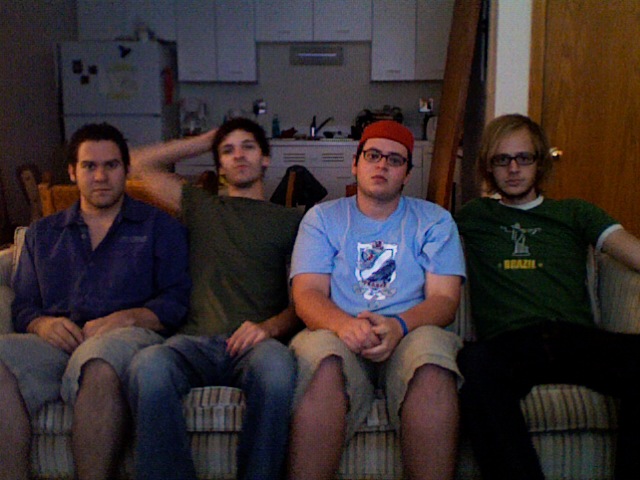
ja, det var ett tag sen nu... vet inte om någon fortfarande kollar bloggen. tiden går. jag har varit tillbaka en månad nu.
blir inget mkt ikväll. en lista:
favoriter ur månadens kulturkonsumtion:
skivor:
Bob Dylan - Modern Times
M. Ward - Post-war
bio:
Little Ms. Sunshine
Jackass 2
konserter:
M. Ward
teater:
Hamlet
böcker:
Odyseen (anra gången i min Wheaton karriär)
Sophia - S. Bulgakov
TV:
Amazing Stories. Kortfilmer från mitten av 80-talet av Spielberg.
ja, det var ett tag sen nu... vet inte om någon fortfarande kollar bloggen. tiden går. jag har varit tillbaka en månad nu.
blir inget mkt ikväll. en lista:
favoriter ur månadens kulturkonsumtion:
skivor:
Bob Dylan - Modern Times
M. Ward - Post-war
bio:
Little Ms. Sunshine
Jackass 2
konserter:
M. Ward
teater:
Hamlet
böcker:
Odyseen (anra gången i min Wheaton karriär)
Sophia - S. Bulgakov
TV:
Amazing Stories. Kortfilmer från mitten av 80-talet av Spielberg.
onsdag, augusti 30, 2006
namn
Name Wizard
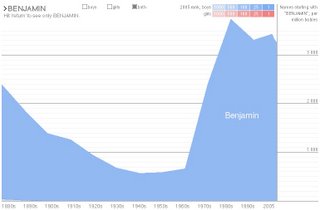
kolla in om du som jag (född 1982) passar in i mönstret. detta är nog statistik från amerika, vet inte dock. benjamin låg tydligen i luften runt tidigt 80-tal...
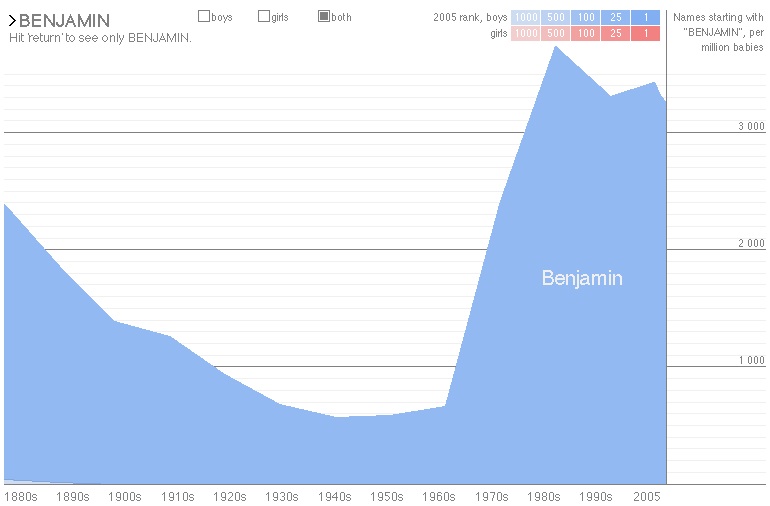
kolla in om du som jag (född 1982) passar in i mönstret. detta är nog statistik från amerika, vet inte dock. benjamin låg tydligen i luften runt tidigt 80-tal...
måndag, augusti 28, 2006
Prenumerera på:
Inlägg (Atom)